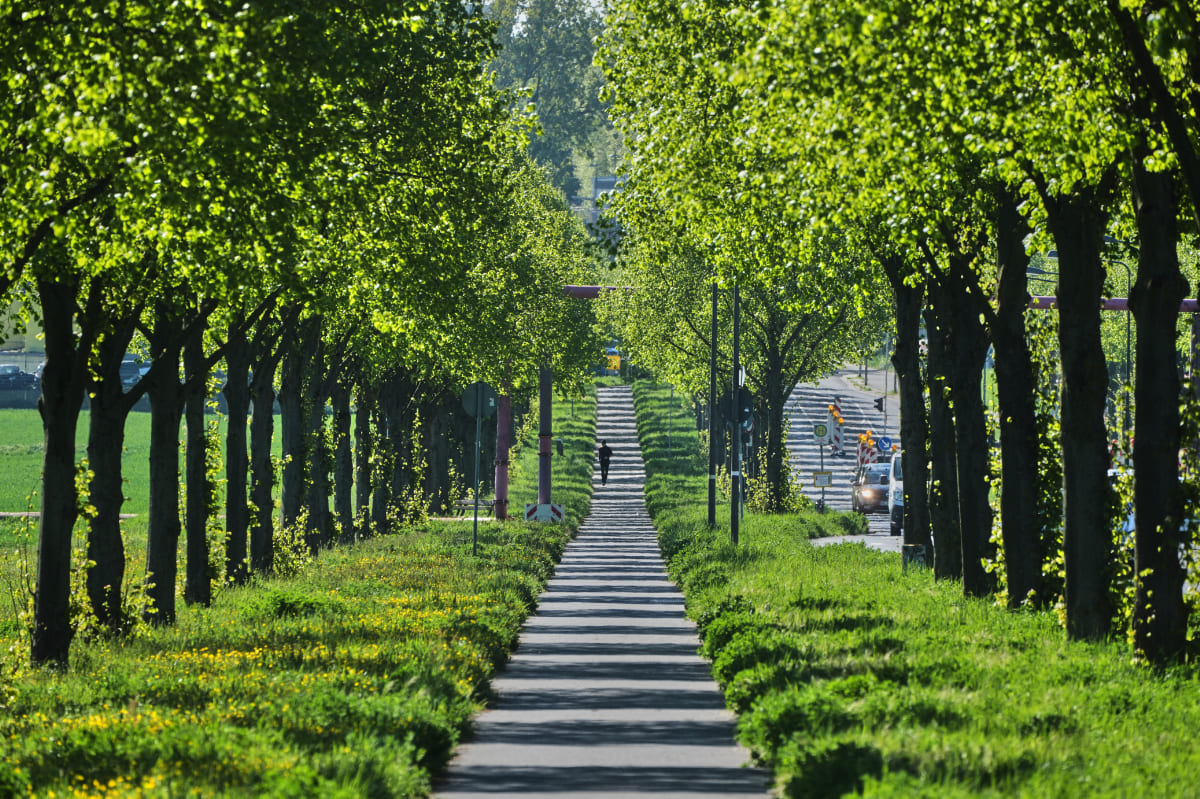
Trees help cool cities by giving shade and releasing water into the air, a new study says. Scientists studied nearly 9,000 large cities around the world. They found that trees reduce city temperatures by about 0.15 degrees Celsiuson average. Without trees, cities would be much hotter because roads, roofs and buildings absorb heat from the sun. This is called the “urban heat island effect.”
The study also found that trees do not help all cities equally. Poorer and hotter cities often have fewer trees, even though they need cooling the most. In some cities, such as Dakar, Jeddah, Kuwait City and Amman, there are so few trees that people get almost no cooling from them. Wealthier cities usually have more trees and cooler temperatures. Scientists say planting more trees could help protect people from dangerous heat in the future.
Trees help cool cities by giving shade and releasing water into the air, a new study says. Scientists studied nearly 9,000 large cities around the world. They found that trees reduce city temperatures by about 0.15 degrees Celsius on average. Without trees, cities would be much hotter because roads, roofs and buildings absorb heat from the sun. This is called the “urban heat island effect.”
The study also found that trees do not help all cities equally. Poorer and hotter cities often have fewer trees, even though they need cooling the most. In some cities, such as Dakar, Jeddah, Kuwait City and Amman, there are so few trees that people get almost no cooling from them.
Wealthier cities usually have more trees and cooler temperatures. Scientists say planting more trees could help protect people from dangerous heat in the future.
本文のTrees help cool cities by giving shade and releasing water into the airは「樹木は木陰を提供し、水分を空気中に放出することで、都市の気温を下げるのを助ける」ということ。ここで使われている名詞のshadeは「日陰、木陰」という意味を表す。shadowが「(光の当たった物体が作る)影」全般を指すのに対し、shadeは「日が当たらずに陰になっている所」という限定的な意味で使う。特にin the shade of ~(~の陰で)という形を押さえておこう。
◆The boy was sitting in the shade of a large tree.
(その少年は、大きな木の木陰に座っていた)