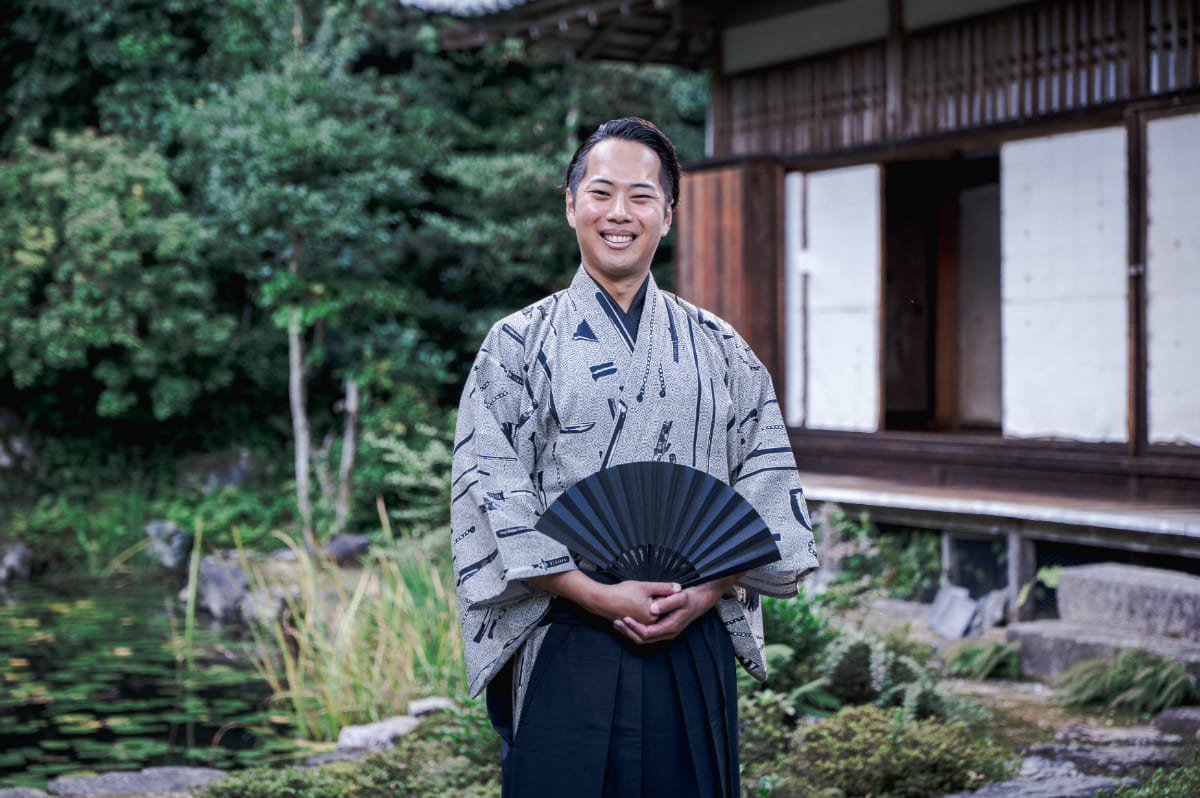
登録者数185万人を超えるYouTubeチャンネル「Let’s ask Shogo | Your Japanese Friend in Kyoto」を運営するShogoさん。京都を拠点に、武道や茶道、能などを学びながら、日本の伝統文化を英語で発信している。今回はShogoさんに、わびさびや引き算の美学など、日本文化ならではの魅力や、海外の人に伝えるための工夫を聞いた。
00:01 / 01:54
1.0
Being Japanese means having access to a wealth of historical tradition and culture. But many Japanese tend to take this wealth for granted. “I have found that some Japan fans overseas are more informed about Japanese history and culture than we are,” says Shogo, a Japanese traditional culture specialist.
Shogo runs a popular YouTube channel titled “Let’s ask Shogo/Your Japanese Friend in Kyoto.” On the channel he teaches budo — specifically Asayama Ichidenryu — in English. He also studies Sado and is expected to become a Kongoryu Noh performer. Budo, Sado and Noh have created Shogo’s online and real-life image.
English also plays a big part in his life. “When I was five, my father took us to Michigan for work. He was in the automobile industry. We stayed for six years. I could speak English well enough. But that didn’t mean I could use the language professionally. Before starting a YouTube channel I attended an interpreter school.” At the school, he learned that talking about Japanese traditional culture is not a one-way street. “I was advised to speak about how Japanese traditional culture is linked to other cultures. Like, budo is connected to boxing. Or taiko to western musical instruments. The goal is to find common ground, and build from there.”
Shogo is based in Kyoto: the headquarters of Japanese tradition. His wife is a kimono kitsuke master. They are professionals as well as specialists in the field of Japanese traditional culture. What was the appeal ? Shogo says there are three main factors. “One is the art of subtraction. The Japanese see beauty in minimality. Tea and Noh are both arts conducted in small spaces with soft lighting and very few props. In a tea house, the guests appreciate a single flower in a bamboo vase. The same goes for Noh. To enjoy it, the audience needs imagination and the sense that they are building the story together with the performer.” The second, says Shogo, is the appreciation of wabi sabi. “The Japanese see perfection in a cracked tea cup, or a broken wooden door. To me, looking for beauty in imperfection is a lovely thing to do.” The third is that “there are no goals and no retirement. You can keep polishing your craft for a long, long time. Sometimes I’m asked, ‘when does this curriculum end?’ And I answer that there is no timeline.”
When he teaches, Shogo says that he wants to respect other traditional cultures as much as Japan’s. “Japanese traditional culture is wonderful but so are other traditional cultures. I just happen to be Japanese, so this is what I do. Someday, I hope to open my own dojo and tea house in Kyoto. There’s no rush. Bit by bit, I would like to become better at my craft and to reach a wider audience.”
日本人であるということは、豊かな歴史や伝統文化に触れられるということだ。しかし、日本人の多くは、その豊かさを当たり前のものとして受け止めがちである。「海外の日本ファンの中には、私たち日本人よりも日本の歴史や文化に詳しい人がいると感じています」と話すのは、日本の伝統文化の専門家、Shogoさんだ。
Shogoさんは、「Let’s ask Shogo / Your Japanese Friend in Kyoto」という人気のYouTubeチャンネルを運営している。チャンネルでは、武道、特に浅山一伝流を英語で教えている。また、茶道を学び、金剛流の能楽師になることも期待されている。武道、茶道、能が、オンラインと実生活の両方におけるShogoさんの人物像を形作っている。
英語も彼の人生において大きな役割を果たしている。「5歳のとき、父の仕事の関係で、家族でミシガン州に行きました。父は自動車業界で働いていました。6年間滞在し、英語は十分に話せるようになりました。でも、それは仕事で使えるという意味ではありません。YouTubeチャンネルを始める前に、通訳学校に通いました」。その学校で、彼は日本の伝統文化について話すことは、一方的に伝えるだけではないと学んだ。「日本の伝統文化がほかの文化とどう結び付いているかを話すようにとアドバイスされました。例えば、武道はボクシングとつながりがあり、太鼓は西洋の楽器と共通点があります。共通点を見つけ、そこから話を広げていくことが目標なのです」。
Shogoさんは、日本の伝統の中心地である京都を拠点に活動している。妻は着物の着付けの師範だ。2人は、日本の伝統文化に精通した専門家であり、(実際にその道で活動する)プロでもある。伝統文化のどこに魅力を感じているのだろうか。Shogoさんによると、主に三つの要素があるという。
「一つ目は、引き算の美学です。日本人は、最小限のもの(簡素さ)の中に美しさを見いだします。茶道も能も、狭い空間で、柔らかな照明とごく少ない小道具を使って行なわれる芸術です。茶室では、客は竹の花入れに生けられた一輪の花を味わいます。能も同じです。能を楽しむには、観客の想像力と、演者と一緒に物語を作り上げているという感覚が必要なのです」。
二つ目は、わびさびを大切にすることだという。「日本人は、ひびの入った茶わんや壊れた木の戸にも完全な美を見いだします。不完全さの中に美しさを探すというのは、すてきなことだと思います」。
三つ目は、「目標も引退もないことです。長い時間をかけて、自分の技を磨き続けることができます。『このカリキュラムはいつ終わるのですか』と聞かれることがありますが、期限はありませんと答えています」。
教える際、Shogoさんは、日本の伝統文化と同じように、ほかの国の伝統文化も尊重したいと考えている。「日本の伝統文化は素晴らしいですが、ほかの国の伝統文化も同じように素晴らしいものです。私はたまたま日本人なので、日本の伝統文化に取り組んでいるだけです。いつか京都に自分の道場と茶室を開きたいと思っています。急ぐ必要はありません。少しずつ技を磨き、より多くの人に知ってもらいたいです」。