ホーム バックナンバー SPECIAL REPORT 20260925 Let’s talk with our...
掲載号を見る
読解のポイント

登録者10万人を超えるYouTubeチャンネル「こだYouTube手話サークル」を運営する、こださん。息子が聴覚障害と診断されたことをきっかけに手話を学び始め、現在は手話の楽しさや魅力をSNSで発信している。今回はこださんに、手話の魅力や、楽しく学び続けるためのヒントを聞いた。

00:01 / 01:54
1.0

“Shuwa,” or sign language, is a form of communication. It is a visual language used by Deaf people. Sign languages developed naturally within Deaf communities worldwide, each with its own grammar and vocabulary. Japanese shuwa developed further after Deaf education began in the Meiji era. In 2011, Japan’s Basic Act for Persons with Disabilities recognized sign language as a language.
In the past, shuwa was used mostly among the hearing impaired. Today, sign language is growing in popularity. Many people want to learn it, even if they have no problem with hearing.
Sign language can bridge the gap between Deaf and non-Deaf. It enables people to have conversations and communicate with one another more easily. Learning sign language can also open up a whole new world, regardless of whether you can hear or not.
Meet Koda-san, who runs a YouTube channel on sign language. She has been doing this for six years. Koda-san says: “My son was diagnosed with a hearing disability as a baby. When he was two years old, he started attending a school for the Deaf, where he learned shuwa. This inspired me to start learning it, too.”
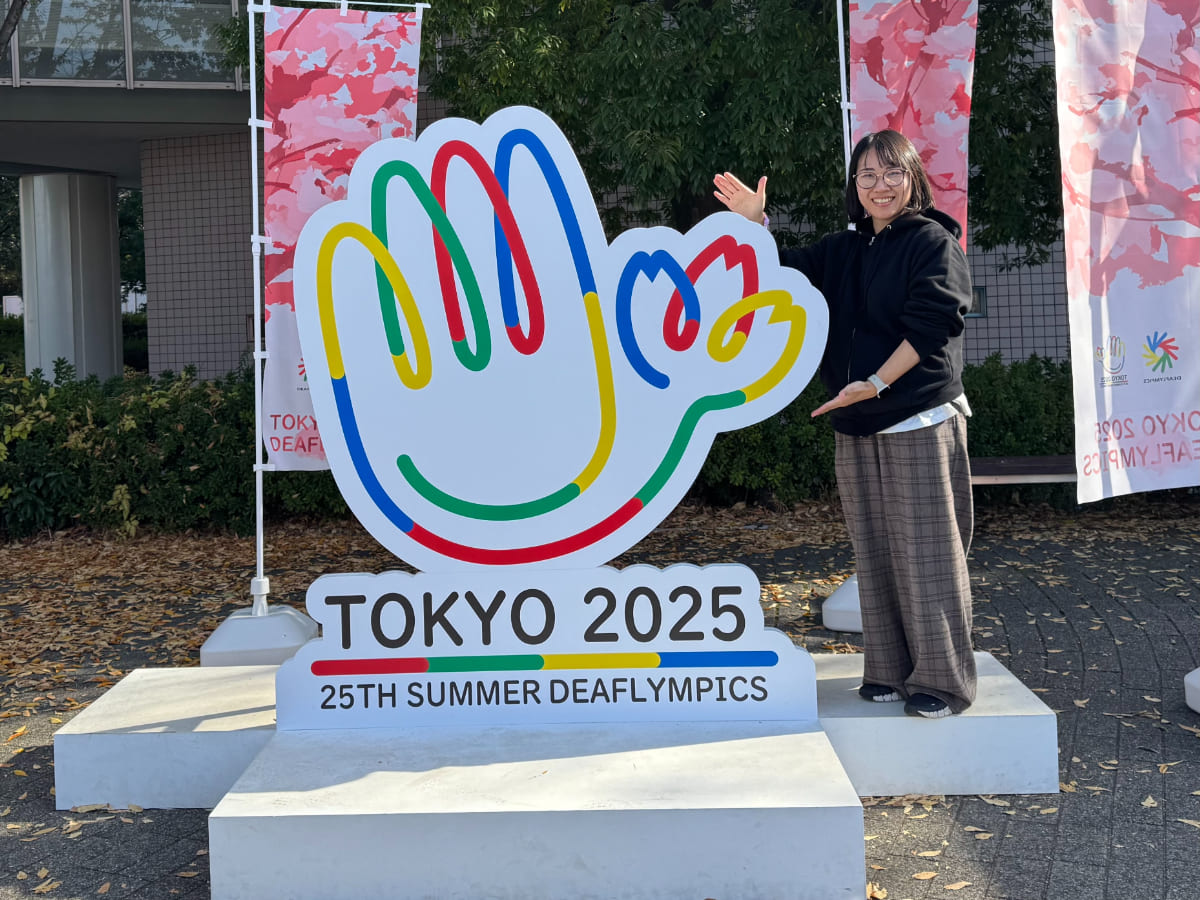
Koda-san says that when she first started her YouTube channel, “There weren’t many people sharing sign language on social media. Today, many more people are doing the same.” Positive comments from her viewers have also made her realize that many people are interested in sign language. The 2025 Deaflympics in Tokyo helped raise interest in sign language.
The Deaflympics is an international sports competition officially recognized by the International Olympic Committee. It was first held in 1924 in Paris. Deaflympics is also known as The Silent Games. The next Summer Deaflympics will be held in Athens, Greece, in 2029.
Koda-san says that the Tokyo Deaflympics helped raise awareness about hearing impairment in Japan. “During the Deaflympics, I saw a lot of people talking in shuwa around major train stations in Tokyo,” she says. “I heard a Deaflympics athlete say that the games had attracted attention in Tokyo, but awareness was still low in other parts of Japan.”
“There are a lot of issues that need to be solved,” says Koda-san. “Social awareness and public support are very important. Having said that, I think shuwa is an interesting language to learn and use. If you feel a spark of interest, I hope you join in. Perhaps you’ll make a new discovery.”
Learning shuwa is like learning any foreign language. Koda-san says it’s important to use it and enjoy it. “Many people learn shuwa because they have a wish to help others. That’s wonderful. But learning shuwa can be a lot of fun. So, relax and enjoy the process.”

「手話」は、コミュニケーションの手段の一つである。ろう者が使う視覚的な言語だ。手話は世界中のろう者のコミュニティーの中で自然に発達し、それぞれに独自の文法や語彙がある。日本の手話は、明治時代にろう教育が始まった後、さらに発展した。2011年には、「障害者基本法」で手話が言語として認められた。 かつて、手話は主に聴覚に障害のある人たちの間で使われていた。現在では、手話を学ぶ人が増えている。聴覚に問題がない人でも、手話を学びたいと考える人は多い。 手話は、ろう者と聴者の間の隔たりを埋めることができる。手話によって、人々はより簡単に会話をしたり、互いにコミュニケーションを取ったりできる。手話を学ぶことで、聞こえるかどうかに関係なく、まったく新しい世界が開けることもある。 手話について発信するYouTubeチャンネルを運営するこださんに話を聞こう。こださんは6年間、活動を続けている。彼女はこう話す。「息子が赤ちゃんのときに聴覚障害があると診断されました。2歳のとき、ろう学校に通い始め、そこで手話を学びました。それがきっかけで、私も手話を学び始めたんです」 こださんによると、YouTubeチャンネルを始めたころは、「SNSで手話について発信している人はあまりいませんでした。今では、同じような活動をする人がずっと増えています」。視聴者から寄せられる前向きなコメントを通して、手話に関心を持っている人が多いことにも気づいたという。東京2025デフリンピックも、手話への関心を高めるきっかけとなった。 デフリンピックは、国際オリンピック委員会(IOC)が正式に認めている国際的なスポーツ大会である。1924年にパリで初めて開催された。デフリンピックは「静かな大会(The Silent Games)」としても知られている。次回の夏季デフリンピックは、2029年にギリシャのアテネで開催される。 こださんは、東京2025デフリンピックによって、日本で聴覚障害への理解が深まったと話す。「デフリンピックの期間中、東京の主要な駅の周辺で、たくさんの人が手話で話しているのを見ました」とこださんは言う。「あるデフリンピック選手が、大会によって東京では注目が集まったものの、日本のほかの地域ではまだ関心が低いと話しているのを聞きました」 「解決しなければならない問題はたくさんあります」とこださんは話す。「社会の理解や、周囲からの支援がとても大切です。とはいえ、手話は学んだり使ったりするのが面白い言語だと思います。もし少しでも興味を持ったら、ぜひ参加してみてください。新しい発見があるかもしれません」 手話を学ぶことは、外国語を学ぶことと似ている。こださんは、実際に使って楽しむことが大切だと話す。「多くの人が、誰かの役に立ちたいという思いから手話を学んでいます。それは素晴らしいことです。でも、手話を学ぶことはとても楽しいものでもあります。だから、リラックスして、学ぶ過程を楽しんでください」

Credit:Kaori Shoji
注釈
  • visual 視覚の
  • Deaf people 耳が聞こえない人々
  • naturally 自然に
  • worldwide 世界中に
  • grammar 文法
  • further さらに
  • Basic Act for Persons with Disabilities 障害者基本法
  • recognized ~を承認した
  • the hearing impaired 耳の不自由な人
  • is growing in popularity 人気が高まっている
  • enables ~ to … ~に…を可能にさせる
  • one another お互いに
  • regardless of ~ ~に関わらず
  • runs ~を運営する
  • was diagnosed with ~ ~と診断された
  • inspired ~ to … ~が…するきっかけとなった
  • officially 正式に
  • recognized by ~ ~に承認された
  • raise awareness 関心を高める
  • a spark of ~ ほんのわずかな~