The Tokyo High Court decided on Nov. 28 that Japan’s laws do not need to allow same-sex marriage. This was a big disappointment for LGBTQ+ people who want the same marriage rights as men and women couples. The ruling also canceled a 2024 lower court decision that had said Japan’s laws were in an “ unconstitutional state ” for not allowing same-sex marriage.
The case is part of a nationwide campaign started in 2019 by a group called Marriage for All Japan. Eight people, including a transgender man, said that Japan’s marriage laws treat them unfairly and take away the legal protectionsstraight couples have.
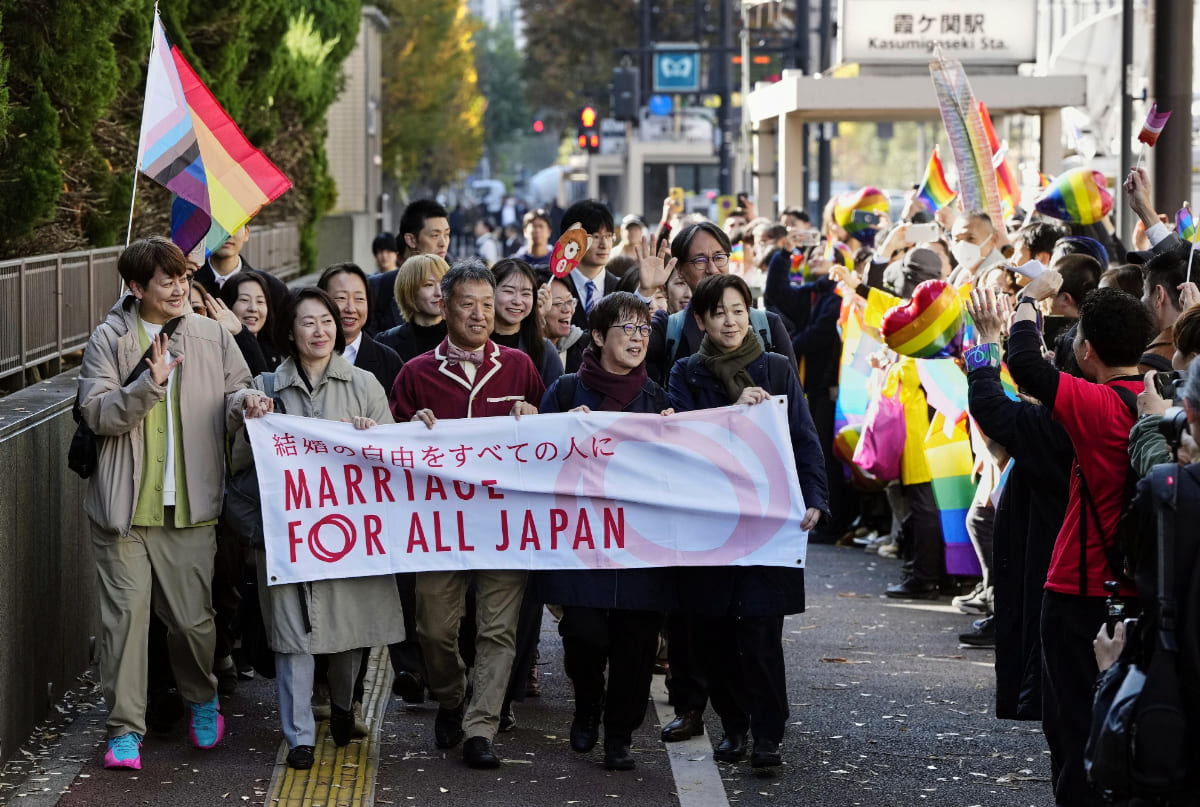
After the ruling, the plaintiffs stood outside the court with supporters. They held a banner saying the decision was unfair. One plaintiff said, “We just want to marry the person we love and be happy.”
東京高裁は11月28日、日本の法律が同性婚を認める必要はないとの判断を示した。同性カップルに異性間と同等の婚姻権を求めてきたLGBTQ+当事者にとって、大きな失望となった判決だった。また今回の判断は、同性婚を認めない現行法を「違憲状態」とした2024年の地裁判決を取り消す内容でもあった。
この訴訟は、2019年に公益社団法人「Marriage for All Japan」が全国的に始めたキャンペーンの一環である。原告にはトランスジェンダー男性を含む8人が名を連ね、日本の婚姻制度が不当な扱いを生み、異性カップルが持つ法的保護を奪っていると主張した。
判決後、原告らは支援者とともに裁判所前に立ち、判決を不当と訴える横断幕を掲げた。原告の一人は「愛する人と結婚し、幸せに暮らしたいだけだ」と語った。
The Tokyo High Court decided on Nov. 28 that Japan’s laws do not need to allow same-sex marriage. This was a big disappointment for LGBTQ+ people who want the same marriage rights as men and women couples. The ruling also canceled a 2024 lower court decision that had said Japan’s laws were in an “ unconstitutional state ” for not allowing same-sex marriage.
The case is part of a nationwide campaign started in 2019 by a group called Marriage for All Japan. Eight people, including a transgender man, said that Japan’s marriage laws treat them unfairly and take away the legal protections straight couples have.
After the ruling, the plaintiffs stood outside the court with supporters. They held a banner saying the decision was unfair. One plaintiff said, “We just want to marry the person we love and be happy.”
和訳
東京高裁は11月28日、日本の法律が同性婚を認める必要はないとの判断を示した。同性カップルに異性間と同等の婚姻権を求めてきたLGBTQ+当事者にとって、大きな失望となった判決だった。また今回の判断は、同性婚を認めない現行法を「違憲状態」とした2024年の地裁判決を取り消す内容でもあった。
この訴訟は、2019年に公益社団法人「Marriage for All Japan」が全国的に始めたキャンペーンの一環である。原告にはトランスジェンダー男性を含む8人が名を連ね、日本の婚姻制度が不当な扱いを生み、異性カップルが持つ法的保護を奪っていると主張した。
判決後、原告らは支援者とともに裁判所前に立ち、判決を不当と訴える横断幕を掲げた。原告の一人は「愛する人と結婚し、幸せに暮らしたいだけだ」と語った。