






Let’s get started!!
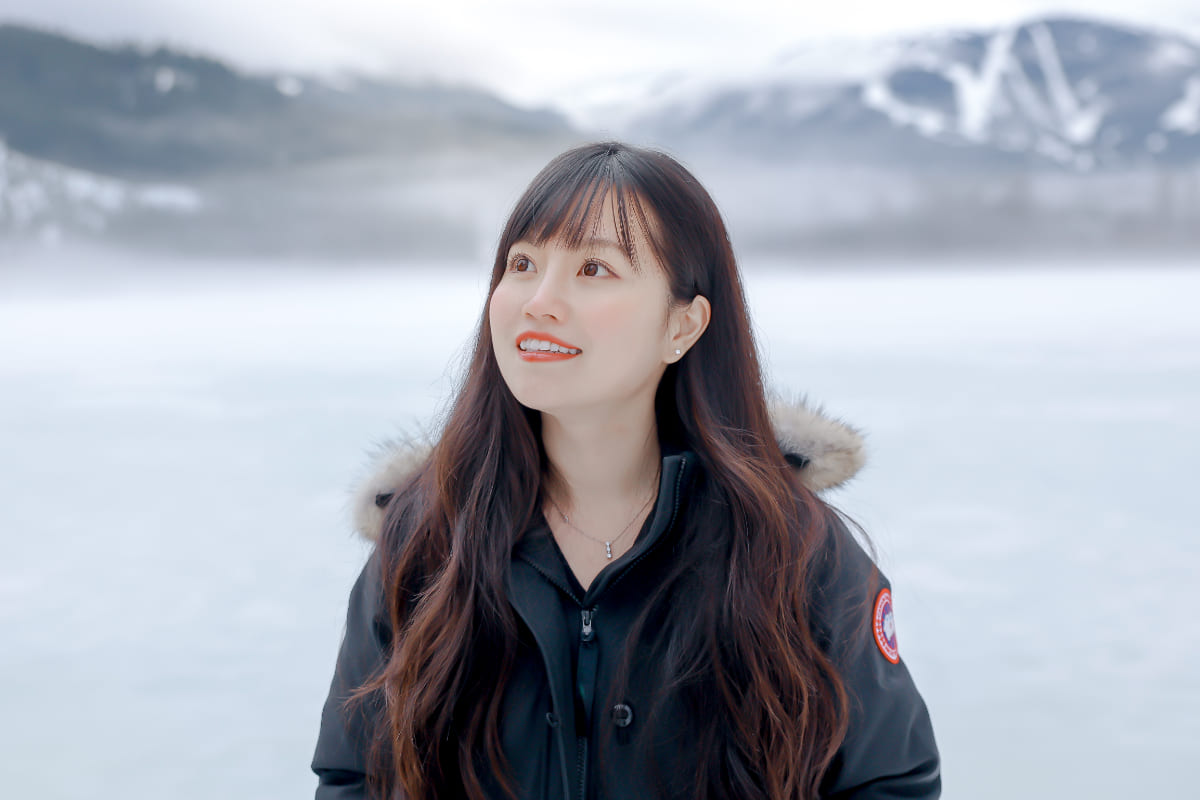
Akane lives and works between Canada and Australia, though at the time of this interview she was in Sydney. She runs a YouTube channel called AK in Canada with over 506,000 subscribers. She also runs a study abroad support business, helping Japanese students pursue opportunities in Canada and Australia. And she made all this happen without prior English skills. “In school I was really bad at English,” says Akane. “My English grade was 2 on a scale of 10. Because I was so bad at it, I didn’t study the subject. In fact, I avoided English altogether.”
Akane went on to become an employee of a Japanese company. One day on her break, she came across an online travel site with beautiful photographs of places she had never visited. “I decided that I had to see these places,” says Akane.
Whenever she had a holiday she took off to see the world. She recalls, “I couldn’t speak English at all. I couldn’t even buy a bus ticket.”
But that never deterred Akane. “On my travels, I learned to listen and to talk to people. Because I had never studied much when I was in school, I could learn English just as a baby learns to talk in their native language.” Before long, Akane was speaking naturally without translating the sentences in her head. “When you study English in Japan, you tend to think and translate Japanese words into English in your head. I never studied English like that. The method of learning as I traveled really worked out for me.”
Before going to Vancouver, Akane had taught English at a major conversation school in Japan. She says that the Japanese have a high level of reading comprehension and grammatical writing. “And I think Japan’s English education has a very high standard. On the other hand, people tend to be perfectionists. They want to attain perfect English skills before they’re ready to communicate with others. That’s like learning all about swimming without ever going into a pool. No one can swim that way.”
Akane says that English is a tool for traveling the world, making friends and connecting with other people. “Any language can be learned by anyone. What really drives progress is consistency, and the secret to staying consistent is enjoying the process.”
Continuity is one of Akane’s watchwords. “I continued to hone my English skills because I had so much fun doing it. Studying something for pleasure becomes less of a chore and much more like a fun project.”
“In school, I was terrible at English but that wasn’t the end of my story. By traveling and communicating with people, I discovered that English opens up your world. It’s the entryway to more life options and new opportunities.”
あかねさんはカナダとオーストラリアを拠点に生活し、仕事をしている。本インタビューの時点ではシドニーに滞在していた。登録者数50万6000人以上のYouTubeチャンネル「AK in Canada」を運営するほか、日本人学生に対してカナダやオーストラリアへの留学を支援する事業も手がけている。しかも、こうした活動を、もともと英語ができなかった状態から実現してきた。「学校では英語が本当に苦手でした。成績は10段階中2くらいでした。苦手だったので勉強もせず、むしろ英語を避けていました」 その後、あかねさんは日本の企業に就職する。ある日、休憩中に見た旅行サイトで、これまで訪れたことのない場所の美しい写真に出会った。「この場所を自分の目で見てみたいと思ったんです」とあかねさんは思い返す。 休暇のたびに海外へ出かけるようになったが、当初は英語がまったく話せなかった。「英語は全然話せず、バスのチケットさえ買えませんでした」 それでも、あかねさんがくじけることはなかった。「旅をする中で、人の話を聞き、会話する力を身につけていきました。学校であまり勉強してこなかった分、赤ちゃんが母語を覚えるように英語を身につけることができたのだと思います」。やがて、頭の中で日本語から英語に訳すことなく、自然に話せるようになったという。「日本で英語を学ぶと、日本語を英語に訳しながら考えることが多いと思います。私はそういう勉強をしませんでした。旅をしながら学ぶ方法が自分には合っていました」。 バンクーバーに渡る前には、日本の大手英会話スクールで英語を教えていた経験もある。日本人の英語力については次のように語る。「日本人は読解力や文法に基づいたライティング力はとても高いと思いますし、日本の英語教育のレベルは高いと感じています。ただ、その一方で完璧主義な人が多いとも思います。完璧にできるようになってから話そうとするのは、プールに入らずに泳ぎ方を学ぶようなものです。それでは泳げるようにはなりません」。 あかねさんにとって、英語は世界とつながるための「道具」である。「英語は世界を旅したり、友達を作ったり、人とつながったりするためのツールです。どんな言語であっても、誰でも習得できます。大切なのは継続することで、続けるためのコツは楽しむことだと思います」。 「継続すること」はあかねさんの大切なキーワードでもある。「楽しいからこそ続けられました。好きで学ぶことは苦ではなく、むしろ楽しいプロジェクトのようになります」。 そして最後に、これまでの歩みを振り返る。「学校では英語が苦手でしたが、それで終わりではありませんでした。旅をして人とコミュニケーションを取る中で、英語が世界を広げてくれることに気づきました。英語は、人生の選択肢や新しいチャンスへの入り口なのです」。

